
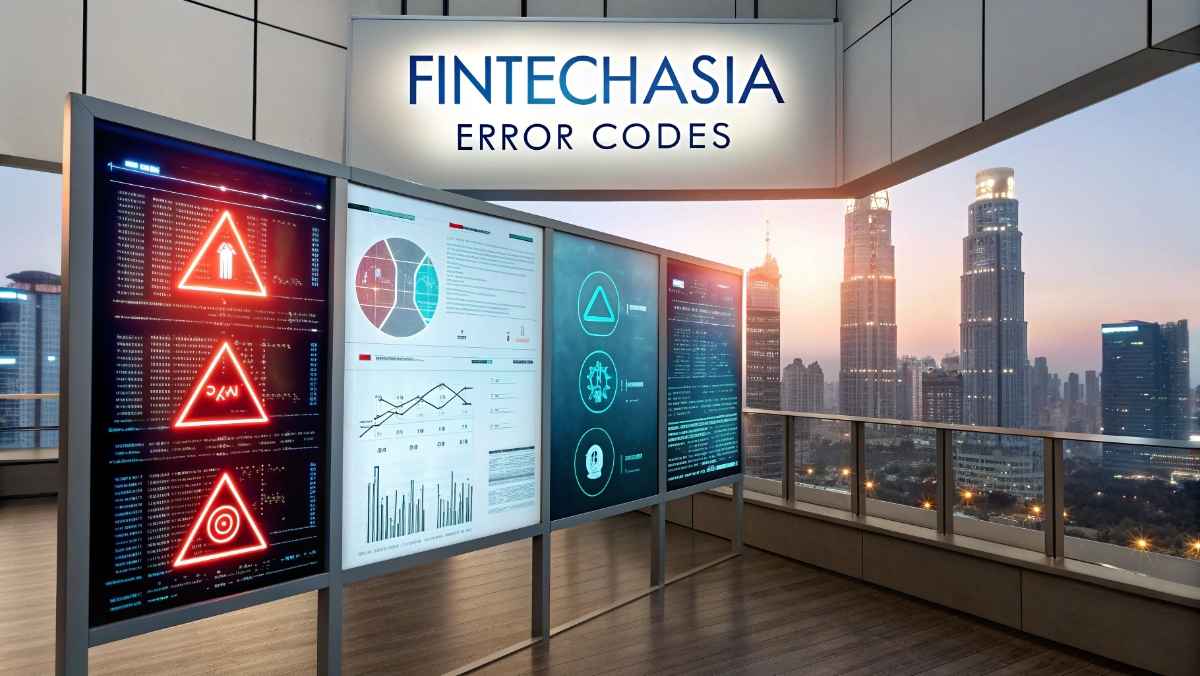
FintechAsia Error Codes are short system messages that explain why a transaction, login, or API request did not work. They help users and developers fix problems faster and keep financial systems running smoothly. Understanding these codes builds confidence, saves time, and protects digital trust.
What Are FintechAsia Error Codes
FintechAsia error codes are system-generated signals that appear when something does not go as planned inside a fintech process.
Instead of showing long and confusing technical messages, the platform uses short numeric or alphanumeric codes. Each code points to a specific issue, such as a login failure, payment decline, permission problem, or API request error.
These codes act like clear road signs. They quickly tell you what went wrong and where to look next. For everyday users, this means less frustration. For developers and businesses, it means faster troubleshooting, reduced downtime, and better customer experience.
Well-designed error codes are not a weakness of a system. They are a strength, because they show transparency and help maintain trust in digital finance.
Why FintechAsia Error Codes Appear
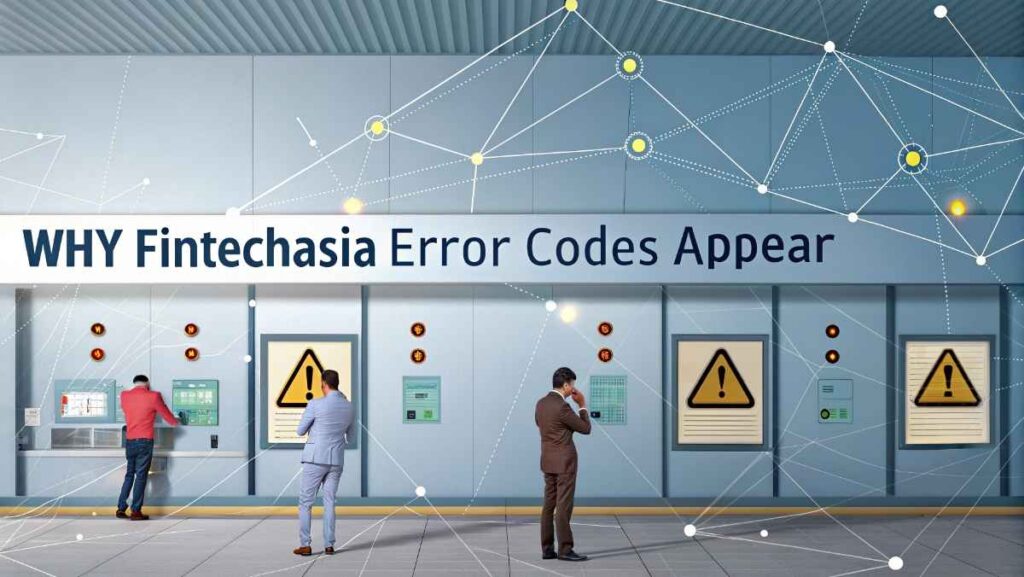
Error codes appear because fintech systems handle sensitive data, real money, and strict security rules. To stay safe and reliable, platforms must stop actions that do not meet requirements.
Common reasons include:
- Incorrect login details
- Expired passwords or API tokens
- Insufficient balance or invalid payment data
- Network interruptions
- Rate limits being exceeded
- Temporary system maintenance
Sometimes the issue is on the user’s side. Other times it comes from server load, third-party services, or security checks. The good news is that most errors are temporary and fixable once the cause is understood.
Common Categories of FintechAsia Error Codes
FintechAsia error codes usually fall into clear groups. Knowing the category makes troubleshooting easier, even if you see a new code for the first time.
Main categories include:
- Authentication and login
- Authorization and permissions
- Payments and transactions
- API and integrations
- Rate limiting and traffic
- Server and system
- Security and compliance
Each category reflects a different part of the fintech workflow. Let’s explore them one by one.
Authentication and Login Error Codes
Authentication errors happen when the system cannot confirm who you are. These are among the most common FintechAsia error codes and usually appear during login or token validation.
Typical causes:
- Wrong username or password
- Expired password
- Invalid or missing API key
- Expired access token
- Too many failed login attempts
These errors are protective by design. They stop unauthorized access and keep accounts safe. Most of the time, the fix is simple: double-check credentials, reset passwords, or generate a new API token.
A smooth authentication process builds confidence. When users know why login failed, they feel in control instead of confused.
Authorization and Permission Error Codes
Authorization errors appear when access is blocked, even though login was successful. In simple words, the system knows who you are but says, “You are not allowed to do this.”
Common reasons:
- Insufficient user role
- Missing permissions
- API scope limitations
- Restricted resources
For example, a user may be allowed to view data but not modify it. Or an API key may allow read access but block transactions.
These rules are essential for security and compliance. Fixing authorization errors usually involves reviewing roles, permissions, or API scopes and adjusting them correctly.
Payment and Transaction Error Codes
Payment and transaction error codes are critical because they directly affect money movement. When these errors appear, users often worry. Clear error messages help reduce panic and restore trust.
Common causes include:
- Insufficient funds
- Incorrect card or account details
- Expired card
- Bank or gateway decline
- Network timeout during processing
Most transaction errors do not mean money is lost. In many cases, the transaction simply did not complete. Users should verify details, check balances, and retry after confirming network stability.
Reliable payment feedback reassures customers and strengthens long-term relationships.
API and Integration Error Codes
Developers and businesses rely heavily on APIs. FintechAsia API error codes usually indicate issues with how a request is built or sent.
Common API problems:
- Invalid endpoint
- Missing parameters
- Incorrect request format
- Unsupported HTTP method
- Malformed JSON payload
Even a small syntax mistake can cause repeated failures. That is why clean documentation, testing, and logging are essential. API error codes are not obstacles; they are guides that help developers refine integrations and improve system stability.
Rate Limiting and Traffic Error Codes
To keep systems fair and stable, FintechAsia applies rate limits. When too many requests are sent in a short time, rate-limit error codes appear.
This usually happens when:
- Applications send repeated requests too quickly
- Traffic spikes during peak usage
- Loops or inefficient API calls exist
These limits protect everyone by preventing overload. Developers can fix rate-limit errors by adding request throttling, caching results, and optimizing call frequency. Higher service plans may also allow larger limits.
Smart traffic handling improves performance and user satisfaction.
Server and System Error Codes
Server and system error codes usually mean the issue is not on the user’s side. These errors appear when internal systems face overload, maintenance, or unexpected failures.
Typical causes:
- Temporary server downtime
- Database connection issues
- Scheduled updates
- Sudden traffic spikes
The best response is patience and monitoring. Most platforms resolve server issues quickly. Clear system error codes show transparency and help users understand that the problem is temporary.
Security and Compliance Error Codes
Security and compliance error codes exist to protect users, data, and financial integrity. They may appear when the system detects unusual or risky activity.
Examples include:
- Suspicious login patterns
- Access from high-risk locations
- Repeated failed authentication attempts
- Compliance rule violations
Sometimes accounts are temporarily restricted for safety. While inconvenient, this protection builds trust in the long run. Resolving these errors often requires identity verification, password updates, or support review.
Strong security signals show that a fintech platform takes responsibility seriously.
How to Troubleshoot FintechAsia Error Codes Effectively
Effective troubleshooting follows a calm and structured approach.
Start by:
- Identifying the error category
- Reviewing recent actions
- Checking input data and credentials
- Confirming account and system status
For developers, logging error responses and testing requests step by step helps isolate problems quickly. For users, carefully reading error messages and following guidance often resolves issues without support.
Good troubleshooting turns frustration into confidence.
Best Practices to Avoid FintechAsia Error Codes
Prevention saves time and builds smooth experiences.
Best practices include:
- Keep credentials secure and updated
- Use strong passwords and multi-factor authentication
- Monitor API usage and rate limits
- Validate payment details before submission
- Test integrations regularly
For businesses, staff training and clear internal processes reduce repeated errors. When systems are prepared, errors become rare and manageable.
Why Understanding FintechAsia Error Codes Matters for Businesses
For businesses, every failed transaction can affect revenue and reputation. Understanding error codes allows teams to respond quickly, explain issues clearly, and fix problems before customers lose trust.
Benefits include:
- Faster issue resolution
- Reduced support workload
- Higher customer satisfaction
- Better system reliability
In competitive fintech environments, reliability is a powerful advantage.
FintechAsia Error Codes and SEO Value for Your Website
Users often search for error codes when something goes wrong. This creates strong informational intent. Publishing a clear, honest, and helpful guide on FintechAsia error codes attracts users who need immediate answers.
High-quality content:
- Builds authority
- Increases dwell time
- Encourages repeat visits
- Strengthens trust signals
When content focuses on solving real problems, search visibility improves naturally.
FAQs
What are FintechAsia error codes?
FintechAsia error codes are short system messages that explain why a login, payment, or request did not work and help users fix issues quickly.
Are FintechAsia error codes dangerous?
No, FintechAsia error codes are not dangerous. They are safety signals that protect accounts, stop mistakes, and help users understand what went wrong.
Why do FintechAsia error codes look technical?
FintechAsia error codes look technical because they are designed for systems and developers, but each code represents a simple issue behind the scenes.
Do FintechAsia error codes mean my transaction failed?
Not always. FintechAsia error codes often mean a transaction was stopped before completion, so money is usually not deducted from your account.
How should users respond to FintechAsia error codes?
Users should read the message calmly, check their details, retry carefully, and contact support if the FintechAsia error code keeps appearing repeatedly.
Conclusion
FintechAsia Error Codes may look technical, but they are designed to help—not confuse. Each code provides insight into what happened and how to fix it. By understanding these signals, users gain confidence, developers improve systems, and businesses protect trust.
In digital finance, clarity equals reliability. When error codes are understood and handled correctly, fintech becomes smoother, safer, and more empowering for everyone.








Leave a Reply