
Car lease agreements come with a stipulation that you must pay a penalty if you break the contract, exceed mileage limits, or fail to meet agreed lease terms.
These penalties exist to protect the vehicle’s value and keep leasing affordable. This expert guide explains why penalties happen, when they apply, and how to avoid them—confidently and stress-free.
Car Lease Agreements Come With a Stipulation That You Must Pay a Penalty if You
Leasing a car feels empowering at first. You get a newer vehicle, lower monthly payments, and the freedom to upgrade every few years. But a lease is not just a payment plan—it’s a contract with clear promises. When those promises aren’t met, penalties may apply.
This doesn’t mean leasing is risky or unfair. In fact, when you understand the rules, leasing becomes predictable, flexible, and cost-smart. The goal of penalties isn’t punishment; it’s balance—keeping vehicles in good shape and payments low for everyone.
In this guide, you’ll learn exactly what triggers penalties, why they exist, and how simple habits can help you finish your lease without surprises.
Why So Many People Prefer Leasing Over Buying

Leasing has surged in popularity because it matches modern lifestyles. People want choice, convenience, and control—without long-term ownership stress.
Benefits of Low Monthly Payments and Newer Cars
Leasing lets you pay only for the vehicle’s depreciation during your term, not the full price. That often means:
- Lower monthly payments
- Access to newer models with modern safety features
- Warranty coverage during most or all of the lease
- Easy upgrades every few years
For drivers who value reliability and predictability, leasing feels smart and freeing.
The Trade-Off: Rules and Restrictions
The flip side is structure. Leases include:
- Mileage limits
- Maintenance requirements
- Condition standards
- Return deadlines
These rules keep costs low—but breaking them can trigger penalties. The good news? Every rule is clearly written and manageable with a little planning.
What Is a Car Lease Agreement, Really?
A car lease agreement is a formal promise between you and the leasing company. It spells out:
- Lease length (often 24–48 months)
- Monthly payment
- Allowed mileage
- Maintenance duties
- Return condition
- Penalties for non-compliance
How the Contract Protects Both Sides
The contract protects you by locking in payments and warranty coverage. It protects the leasing company by ensuring the vehicle comes back in sellable condition. When both sides honor the agreement, everyone wins.
Why Do Lease Agreements Have Penalties?
Penalties exist to protect value, not to trick drivers. The leasing company still owns the car. If it comes back with excessive miles or damage, it’s worth less.
Penalties help:
- Encourage responsible driving
- Cover unexpected value loss
- Keep monthly payments lower for future lessees
Industry-Standard Rules Across Leasing Companies
Across the industry, you’ll see similar standards:
- Mileage caps
- “Excess wear and use” guidelines
- Early termination formulas
- Inspection processes
Consistency means clarity—you can compare offers confidently.
The Most Common Lease Penalty Triggers
Understanding these triggers puts you in control.
Exceeding the Mileage Limit
Most leases allow 10,000–15,000 miles per year. Go over, and you’ll pay a per-mile fee.
Why it matters: Mileage directly impacts resale value.
Extra-Mile Fees and Resale Value
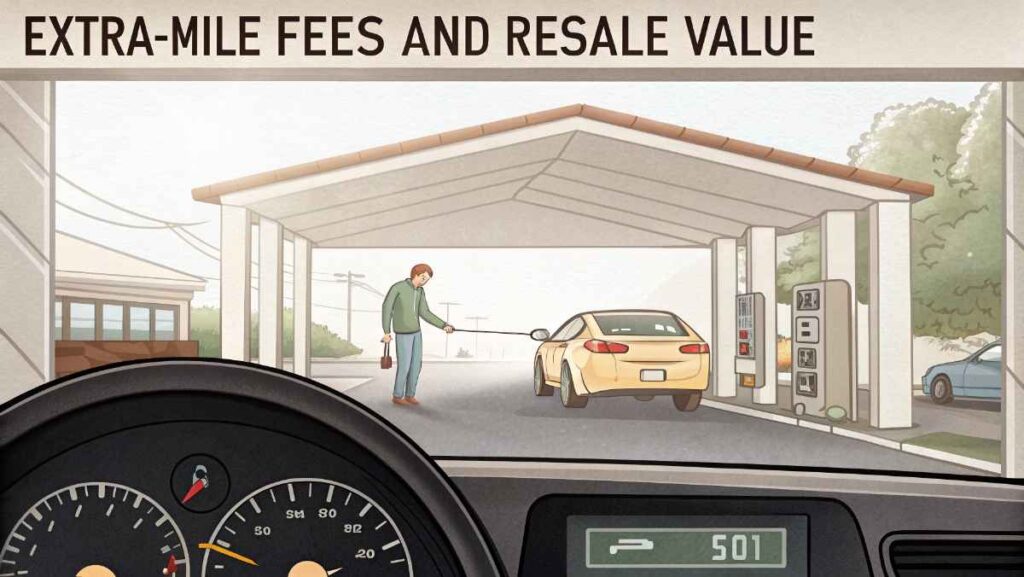
Extra miles reduce what the car can sell for later. Per-mile fees (often just cents) add up quickly if you underestimate your driving. Choosing the right mileage plan upfront is empowering.
Ending the Lease Early
Early termination disrupts the depreciation plan. That’s why it can be costly.
Early Termination Costs
Depending on the contract, costs may include:
- An early termination fee
- Remaining payments
- Value-based charges
Some drivers reduce impact through lease transfers or dealer trade-ins—options worth asking about early.
Excessive Wear and Tear
Normal wear is expected. Penalties apply only when damage exceeds guidelines—like deep dents, cracked lights, or torn interiors.
Tip: Routine care and minor fixes before inspection can save money.
Missing Monthly Payments
Late or missed payments can cause:
- Late fees
- Credit impact
- Possible repossession
Solution: Auto-pay and reminders create peace of mind.
Unauthorized Modifications
Custom paint, dark tint, or aftermarket parts can lower resale value. If changes can’t be reversed cleanly, you may be charged.
Going Over Lease-End Deadlines
Late returns may trigger daily fees or extra payments. Scheduling ahead keeps everything smooth.
Common Lease Stipulations You Must Follow
Most leases share these expectations:
- Stay within mileage limits
- Follow maintenance schedules
- Avoid major damage
- Get approval for modifications
- Return the car on time and in good condition
When you treat these as simple habits, penalties become unlikely.
What to Do Before Signing a Lease
Smart preparation turns leasing into a confident decision.
Read the Whole Agreement
Don’t rush. Focus on:
- Mileage rules
- Wear-and-tear standards
- Early termination terms
- Fee calculations
Ask for explanations in plain language.
Check Mileage and Penalties Upfront
Estimate your real driving—commutes, trips, life changes. Paying a little more for higher mileage can be cheaper long-term.
Compare Offers and Mindset Around Payments
Compare total cost, not just monthly payment. Leasing works best when it fits your lifestyle—not just your budget.
Ask About End-of-Lease Options and Get a Second Opinion
Ask about:
- Buying the car
- Extending the lease
- Switching to a new model
A trusted second opinion can catch details you missed.
FAQs
What Happens if You Break Out of a Car Lease Early?
If you end a car lease early, you may pay extra fees, remaining payments, or charges based on the car’s value and contract rules.
Can I Transfer My Lease to Someone Else?
Some leasing companies allow lease transfers to another approved driver, but you may pay transfer fees and must meet approval requirements.
Do I Have to Repair Damage Before Returning the Car?
You don’t need to fix normal wear, but major damage may cost less if repaired before return instead of paying higher lease penalties.
Do All Leases Have Mileage Limits?
Yes, all car leases include mileage limits because mileage affects car value, and driving beyond the limit usually leads to extra charges.
Can You Avoid Lease Penalties?
Yes, you can avoid lease penalties by following mileage limits, maintaining the car, paying on time, and returning it in good condition.
Is Leasing Still Worth It with Penalties?
Yes, leasing is worth it if you understand the rules, plan your driving, and enjoy lower payments with newer cars and fewer long-term worries.
Conclusion
A car lease can be a smart, flexible, and rewarding choice—when you understand the stipulations. Car lease agreements come with a stipulation that you must pay a penalty if you break the rules, but those rules are clear, fair, and easy to follow.
By choosing the right mileage, caring for the vehicle, paying on time, and planning your return, you can finish your lease confidently—without surprise bills. Knowledge turns leasing from stressful to empowering.














Leave a Reply